Need a different combination?
We adapt an existing module or develop a new one. Ask Willem.


Turns a potentiometer, a joystick with centre position or a resistance sensor into a 4-20 mA, 0-10 V or 0-5 V signal, with adjustable limits. The PR100 series is set up with push buttons, the PR181 series via a display.
No module with this combination. Ask about custom electronics
| Input | Output | Isolated | Supply | Article |
|---|---|---|---|---|
| Potentiometer | 0-5 V | No | 14 to 32 V DC | PR520-X001 |
| Potentiometer | 4-20 mA or 0-20 mA | No | 12 and 24 V DC, operating range 11 to 30 V DC | PR100s01 |
| Potentiometer | 0-10 V | No | 12 and 24 V DC, operating range 11 to 30 V DC | PR100s07 |
| Potentiometer | 0-5 V | No | 12 and 24 V DC, operating range 11 to 30 V DC | PR100s08 |
| Resistance | 4-20 mA or 0-20 mA | Yes | 9 to 30 V DC | PR181-X038 |
| Resistance | 4-20 mA or 0-20 mA | Yes | 9 to 30 V DC | PR181-X039 |
| Joystick or Potentiometer | 4-20 mA or 0-20 mA | Yes | 9 to 30 V DC | PR181-X046 |
| Potentiometer | 0-10 V | Yes | 9 to 30 V DC | PR181-X067 |
| Potentiometer | 4-20 mA or 0-20 mA | Yes | 9 to 30 V DC | PR181-X089 |
| 0-10 V | Potentiometer | Yes | 12 and 24 V DC, operating range 11 to 30 V DC | PR505x501 |
| Joystick | 0-10 V | No | 12 and 24 V DC, operating range 11 to 30 V DC | PR515x553 |
| Resistance | 0-10 V | No | 12 and 24 V DC, operating range 11 to 30 V DC | PR515x556 |
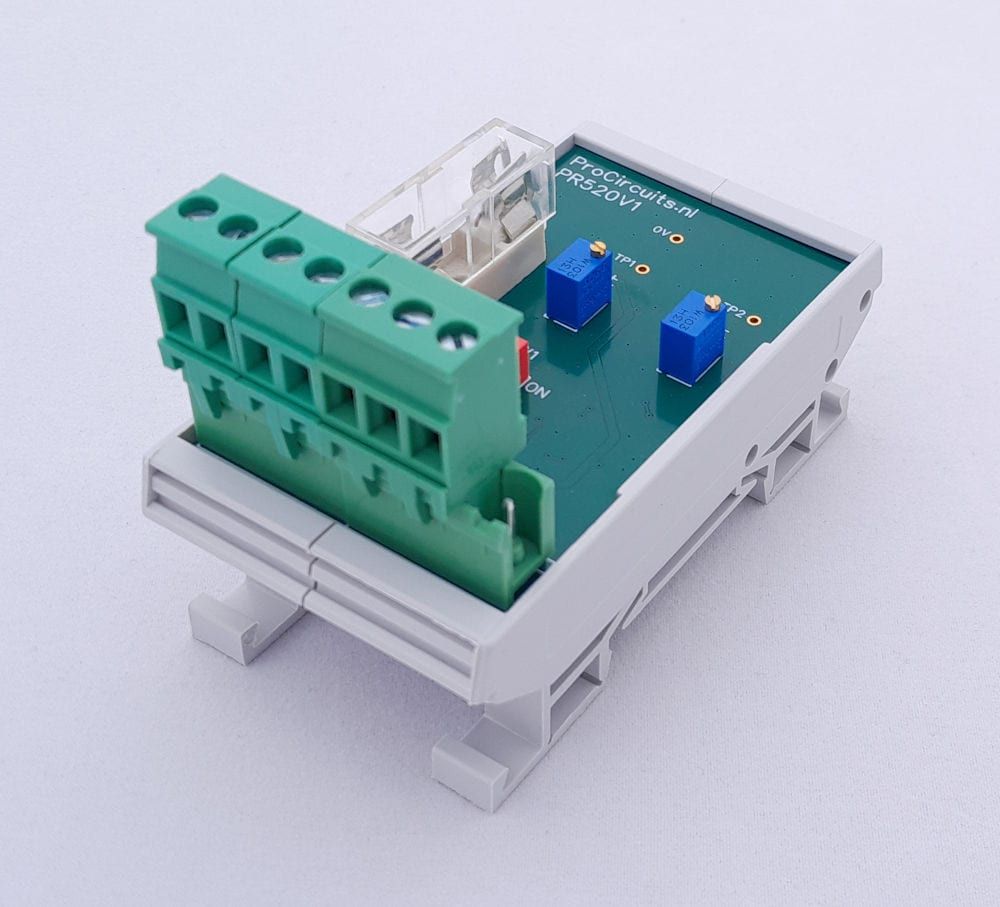
PR520-X001
In: PotentiometerOut: 0-5 V
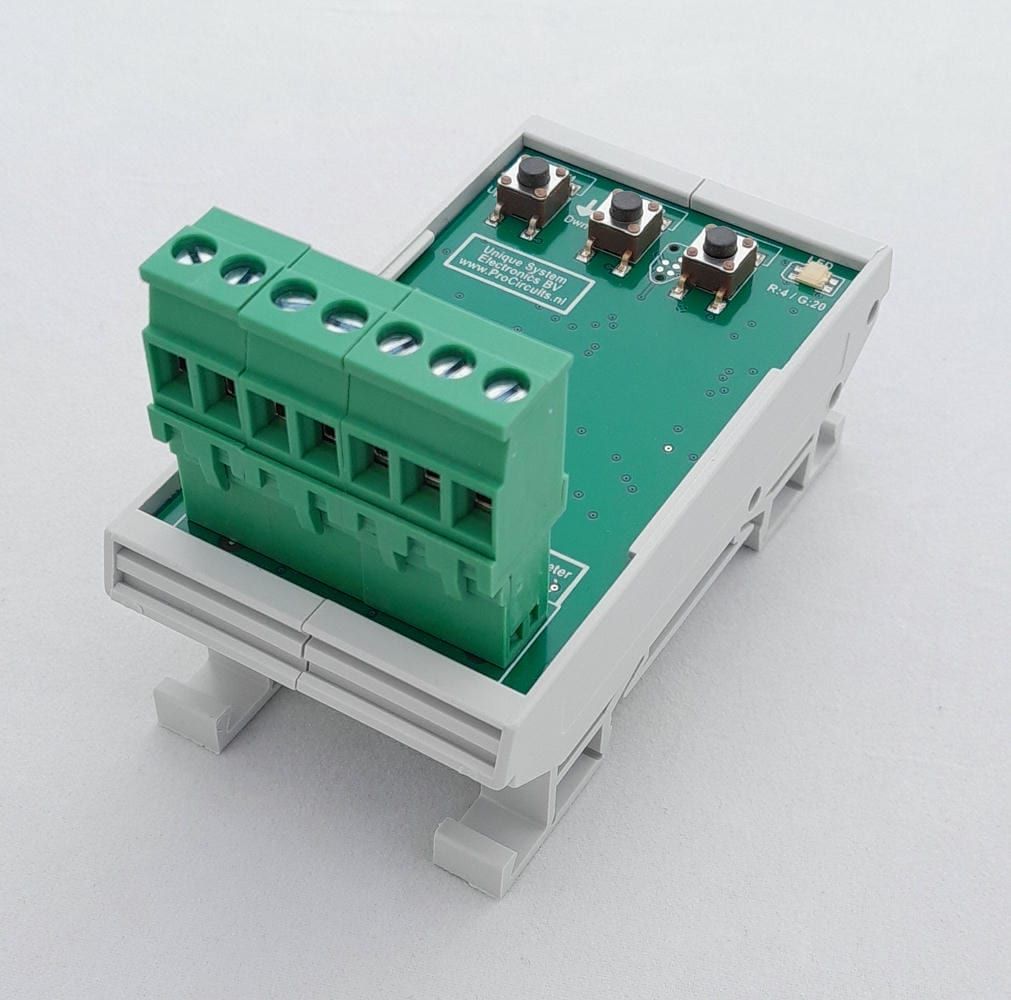
PR100s01
In: PotentiometerOut: 4-20 mA or 0-20 mA
PR100s07
In: PotentiometerOut: 0-10 V
PR100s08
In: PotentiometerOut: 0-5 V
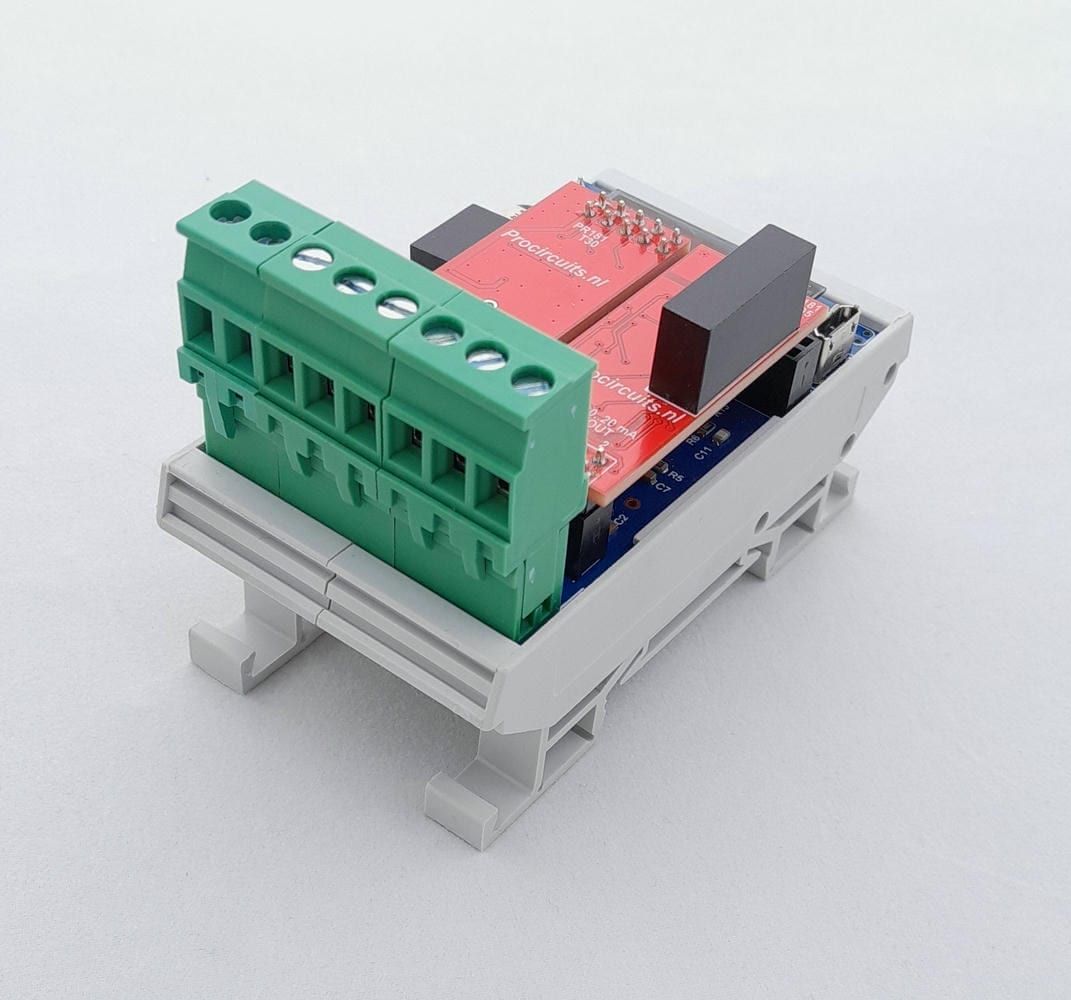
PR181-X038
In: ResistanceOut: 4-20 mA or 0-20 mA
PR181-X039
In: ResistanceOut: 4-20 mA or 0-20 mA
PR181-X046
In: Joystick or PotentiometerOut: 4-20 mA or 0-20 mA
PR181-X067
In: PotentiometerOut: 0-10 V
PR181-X089
In: PotentiometerOut: 4-20 mA or 0-20 mA
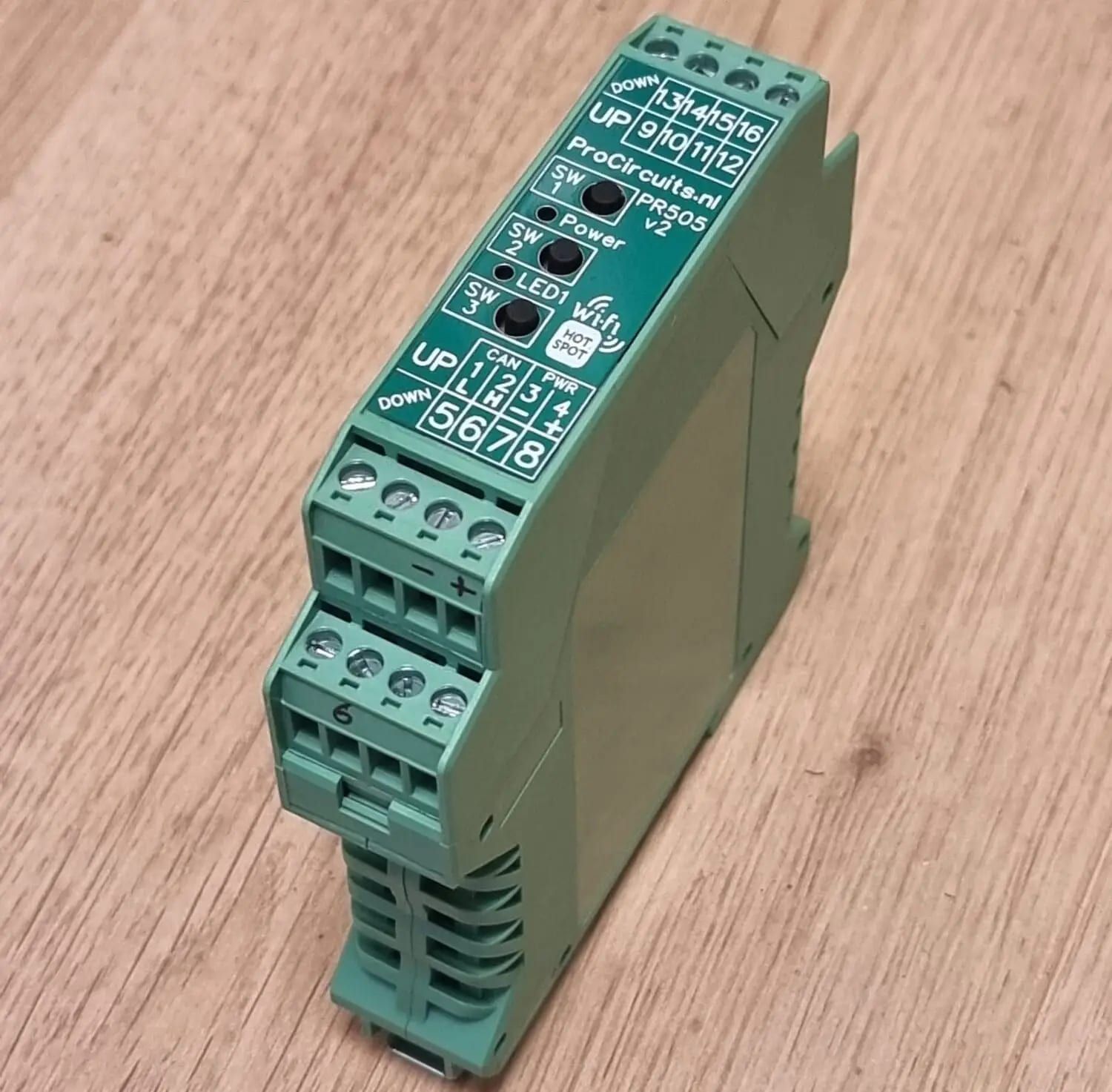
PR505x501
In: 0-10 VOut: Potentiometer
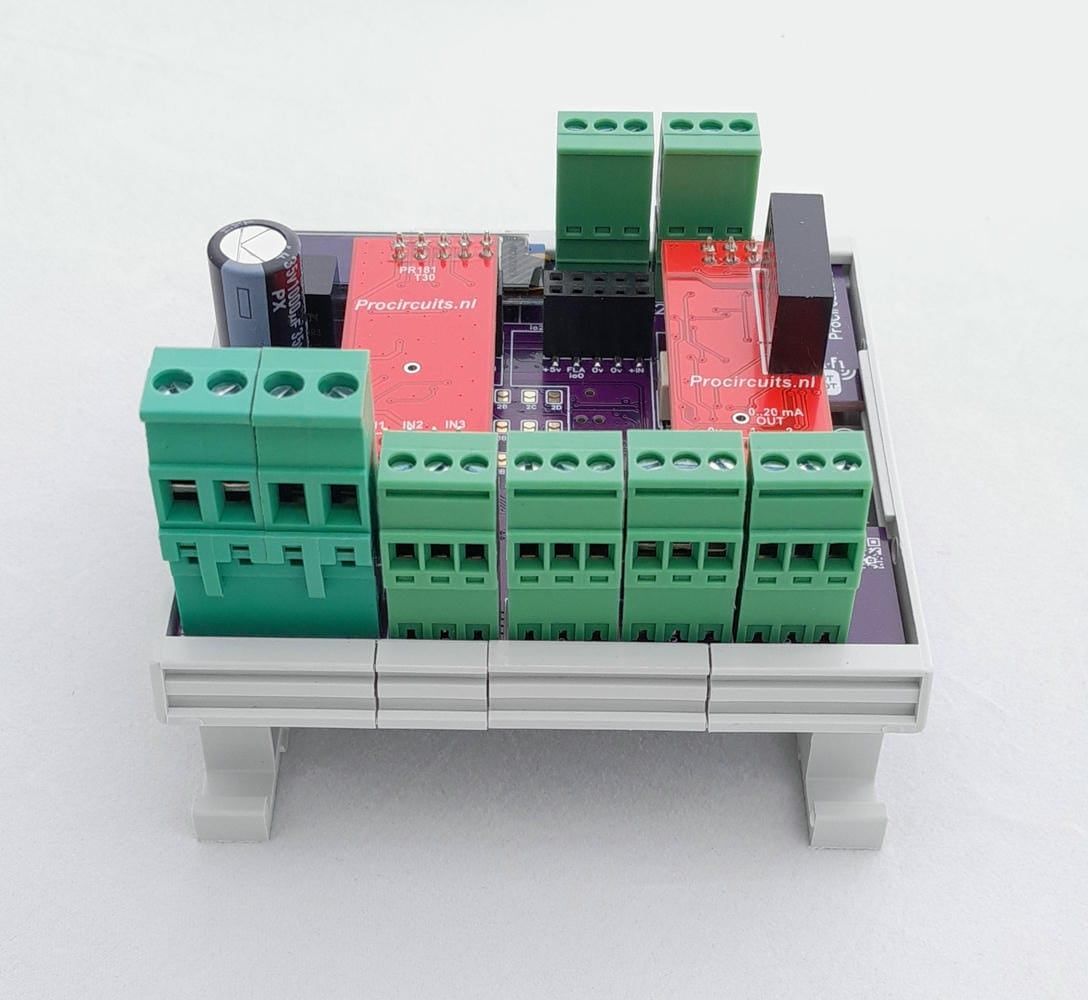
PR515x553
In: JoystickOut: 0-10 V
PR515x556
In: ResistanceOut: 0-10 V
We adapt an existing module or develop a new one. Ask Willem.
The converters in the PR100 series are set up with three push buttons and a green LED on the module. Button 3 puts the module in programming mode, button 2 stores the value for the maximum and button 1 the value for the minimum; button 3 saves. The output can then still be fine-tuned by hand. All versions run on 12 and 24 V DC, operating range 11 to 30 V DC, at an ambient temperature of 0 to 55 °C; the board measures 43 x 72 mm and a DIN rail holder is supplied as standard. The output minus is internally connected to the supply minus: the PR100 is not galvanically isolated. To restore the factory settings, disconnect the supply, hold button 2 and reconnect the supply.
Do input and output need to be isolated, or would you rather set it up on a display? Then choose a module from the PR181 series: it is set up on a display, runs on 9 to 30 V DC and has a galvanically isolated output and an adjustable rise and fall rate. Where a PR181 exists for the same conversion, it is listed on the product page under Other version.
| Article | Input | Output |
|---|---|---|
| PR100s01 | Potentiometer | 4-20 mA or 0-20 mA |
| PR100s07 | Potentiometer | 0-10 V |
| PR100s08 | Potentiometer | 0-5 V |
The modules in the PR181 series are set up on the display on the module, using the UP, DOWN and OK buttons. On most versions the lower and upper limits of input and output are set independently, as is the rise and fall rate of the output; the settings of each module are listed on the product page under Setup. With an adjustable rise and fall rate, motors, pumps, valves and hydraulics can be driven smoothly. On versions with an analogue output, that output is galvanically isolated from input and supply to prevent ground loops. New settings are stored through the SAVE menu. The standard DIN rail enclosure measures 45 x 83 mm (board 42.6 x 72 mm); versions with more terminals are wider. Most modules run on 9 to 30 V DC at -25 to 55 °C, non-condensing.
For some conversions there is also a version without display and without galvanic isolation in the PR100 series: it is set up with push buttons and runs on 12 and 24 V DC (operating range 11 to 30 V DC). Where one exists, it is listed on the product page under Other version.
| Article | Input | Output |
|---|---|---|
| PR181-X038 | Resistance | 4-20 mA or 0-20 mA |
| PR181-X039 | Resistance | 4-20 mA or 0-20 mA |
| PR181-X046 | Joystick or Potentiometer | 4-20 mA or 0-20 mA |
| PR181-X067 | Potentiometer | 0-10 V |
| PR181-X089 | Potentiometer | 4-20 mA or 0-20 mA |
The PR505 modules have a built-in Wi-Fi hotspot. Hold button SW1 for about ten seconds and connect a phone, tablet or laptop to change settings or load new firmware. The modules run on 12 and 24 V DC.
| Article | Input | Output |
|---|---|---|
| PR505x501 | 0-10 V | Potentiometer |
The modules in the PR515 series have an OLED display and push buttons, so they can be set up without a computer and show the current values of inputs and outputs. They run on 12 and 24 V DC systems. Most versions can be extended on request, for example with an extra relay output, a PWM output, a bus connection (CAN bus or Modbus) or a different sensor input.
| Article | Input | Output |
|---|---|---|
| PR515x553 | Joystick | 0-10 V |
| PR515x556 | Resistance | 0-10 V |
Get in touch, without obligation
Contact